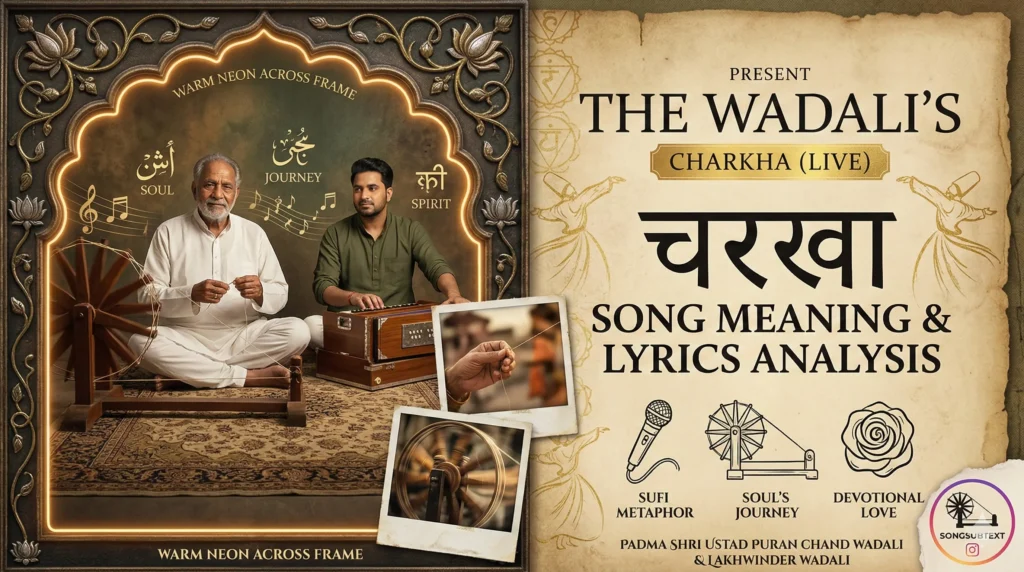
| 🎵 Song Information | |
|---|---|
| Song Name | Charkha (Traditional Sufi Kafi) |
| Singer | The Wadali Brothers (Ustad Puran Chand & Lakhwinder Wadali) |
| Lyricist | Traditional / Public Domain (Inherited Sufi Poetry) |
| Label | Wadali Music |
| Release Date | July 26, 2020 |
Charkha Song Meaning, Lyrical Analysis & Translation
Decoding the Spiritual Masterpiece by The Wadali Brothers
Introduction to the Spiritual Anthem
The landscape of Indian classical and folk music is dotted with profound spiritual compositions, but few carry the emotional weight and timeless relevance of the Charkha (The Spinning Wheel). Most powerfully rendered by the legendary Padma Shri Ustad Puran Chand Wadali and his son Lakhwinder Wadali, this song transcends the boundaries of standard musical entertainment to become a deep, meditative exploration of the human soul. The song did not become popular because of a cinematic release or viral marketing; its popularity stems from centuries of oral tradition, spiritual gatherings (Mehfil-e-Sama), and the sheer, unvarnished truth of its lyrics.
Listeners across the globe are magnetically drawn to the “Charkha” song due to its raw emotional delivery and philosophical depth. The musical style is deeply rooted in the Punjabi Sufi tradition of Kafi, characterized by intense vocal improvisations (alaaps), repetitive rhythmic structures, and a drone that mimics the continuous hum of a wooden spinning wheel. The overall emotion is one of Birha (the agonizing pain of separation from the Beloved) mixed with a sense of urgent devotion.
Historically, the metaphor of the spinning wheel was popularized by 16th and 18th-century mystics like Shah Hussain and Bulleh Shah. In an era before industrialization, village women gathered in courtyards (Trinjan) to spin cotton into thread for their dowries. The Sufi masters, observing this daily rural activity, transformed it into the ultimate metaphysical symbol: the human soul preparing its spiritual dowry before departing the temporary world to unite with the Divine Husband. The Wadali Brothers’ rendition breathes vibrant life into this centuries-old poetic tradition, ensuring that the ancient wisdom remains accessible and profoundly moving for modern audiences.
Deep Song Meaning & Symbolism
To understand the Charkha lyrics meaning, one must peel back the layers of literalism and step into the esoteric world of Sufi mysticism (Tasawwuf). At its core, the song tells the metaphorical story of a young bride-to-be who is frantically spinning cotton into thread to prepare her dowry. However, the hidden meaning is profoundly spiritual. The young woman represents the human soul; the spinning wheel (Charkha) is the physical human body; the raw cotton is the finite lifespan granted to us; and the thread she weaves represents the breaths we take and the karma/deeds we accumulate.
The predominant emotion driving the lyrics is a blend of anxiety, humility, and ecstatic love. The singer expresses deep shame at the thought of facing the Beloved (God) empty-handed. In the cultural context of historic Punjab, a girl arriving at her in-laws’ house without a beautifully woven dowry would face severe social ridicule. Translated spiritually, this means that a human being who wastes their earthly life in materialistic distractions—failing to remember God or perform good deeds—will stand spiritually bankrupt and humiliated in the afterlife.
The symbolism of the Charkha is meticulously detailed. The wheel is made of wood and earth, a direct reference to mortality. Just as the wooden machine will eventually break down, rot, and return to the soil, the human body is destined for dust. Therefore, the repetitive act of spinning represents Zikr—the continuous, unbroken remembrance of the Divine. If the spinner’s attention falters even for a second, the thread snaps, symbolizing a breath wasted without divine consciousness.
The most vital life lesson embedded within this song is the urgency of spiritual mindfulness. The song does not preach abandonment of the physical world. Instead, it instructs the listener to sit directly in the center of their daily life (at the spinning wheel) but to dedicate every single action, breath, and thought to the love of the Creator. It is a powerful reminder that our physical existence is incredibly fragile and that our ultimate worth lies not in the wealth we amass, but in the spiritual fabric we weave during our brief stay on Earth.
Meaning in Multiple Languages
English Meaning
In the realm of Sufi philosophy, the ‘Charkha’ transcends its physical utility to become a moving metaphysical symbol of mortal existence. When the Wadali Brothers render this composition, they vocalize the deep, agonizing longing of the human soul to reunite with the Creator. The wooden wheel represents the fragile human body, and the spun thread represents every single breath a person takes. Just as a village maiden spins cotton to prepare her dowry before leaving for her husband’s home, the spiritual seeker must accumulate a wealth of good deeds, karma, and constant remembrance of God before departing this physical realm. The song serves as a poignant reminder of our dust-to-dust reality and the urgency of devotion.
Hindi Meaning (हिन्दी अर्थ)
सूफी दर्शन में ‘चरखा’ केवल सूत कातने का एक साधारण यंत्र नहीं है, बल्कि यह हमारे भौतिक शरीर (जिस्म) और नश्वर जीवन का एक अत्यंत शक्तिशाली प्रतीक है। वडाली बंधुओं द्वारा गाए गए इस गीत में, चरखे का घूमना समय के चक्र को दर्शाता है, और उससे निकलने वाला धागा हमारी हर एक सांस का प्रतीक है। जिस प्रकार एक अविवाहित कन्या अपने विवाह से पूर्व सूत कातकर अपना दहेज तैयार करती है, उसी प्रकार हर इंसान को इस दुनिया में रहकर ईश्वर की याद (ज़िक्र) का सूत कातना चाहिए। यह गीत हमें चेतावनी देता है कि शरीर रूपी यह चरखा मिट्टी का बना है, और अंततः इसे मिट्टी में ही मिल जाना है। अतः समय रहते ईश्वर से प्रेम करना चाहिए।
Bengali Meaning (বাংলা অর্থ)
সুফি আধ্যাত্মিক দর্শনে ‘চরকা’ (সুতো কাটার যন্ত্র) শুধুমাত্র একটি সাধারণ কাঠের যন্ত্র নয়, এটি মানবদেহ এবং নশ্বর জীবনের এক গভীর রূপক। ওয়াদালি ব্রাদার্স যখন এই গানটি পরিবেশন করেন, তখন তাঁরা আসলে সেই পরমাত্মার (ঈশ্বর) খোঁজে থাকা এক ব্যাকুল আত্মার আর্তনাদকে ফুটিয়ে তোলেন। চরকার চাকা সময়ের আবর্তনকে নির্দেশ করে এবং তা থেকে তৈরি হওয়া সুতো মানুষের প্রতিটি শ্বাস-প্রশ্বাসের প্রতীক। যেমন একজন তরুণী বিয়ের আগে চরকায় সুতো কেটে নিজের যৌতুক প্রস্তুত করে, তেমনি মানুষকে পৃথিবীতে বেঁচে থাকা অবস্থায় ভালো কাজ ও ঈশ্বরের স্মরণের মাধ্যমে আধ্যাত্মিক সম্পদ সঞ্চয় করতে হয়। গানটি মনে করিয়ে দেয় যে এই মাটির দেহ একদিন মাটিতেই মিশে যাবে।
Tamil Meaning (தமிழ் பொருள்)
சூஃபி தத்துவத்திலும் இசையிலும், ‘சர்க்கா’ (நூல் நூற்கும் சக்கரம்) என்பது வெறும் மரத்தாலான இயந்திரம் அல்ல; இது மனித உடலையும், வாழ்க்கையின் நிலையற்ற தன்மையையும் குறிக்கும் ஒரு ஆழமான உருவகமாகும். வாடாலி சகோதரர்கள் இந்தப் பாடலைப் பாடும்போது, இறைவனுடன் ஒன்றிணையத் துடிக்கும் மனித ஆன்மாவின் ஏக்கத்தையே வெளிப்படுத்துகிறார்கள். சர்க்காவின் சக்கரம் கால ஓட்டத்தையும், அதிலிருந்து வரும் நூல் மனிதன் சுவாசிக்கும் ஒவ்வொரு மூச்சையும் குறிக்கிறது. ஒரு பெண் திருமணத்திற்கு முன் தன் சீர்வரிசைக்காக எப்படி கவனமாக நூலை நூற்கிறாளோ, அதேபோல மனிதனும் இந்த பூமியில் இருக்கும் குறுகிய காலத்தில் இறைவனின் நினைவால் நற்செயல்களைச் சேர்க்க வேண்டும். சர்க்கா மண்ணால் ஆனது, ஒரு நாள் மண்ணுக்கே திரும்பும் என்ற உண்மையை இப்பாடல் ஆழமாக உணர்த்துகிறது.
Line-by-Line Meaning Table
Educational Vocabulary Translation
Thematic Analysis
Devotion & Spirituality: The central pillar of the song is pure, unadulterated devotion. It strips away complex religious dogma, reducing the relationship with God to an intimate romance between the soul and the Beloved.
Mortality & Life’s Fragility: The recurring motif of “Mitti” (dust/clay) serves to destroy human ego. It constantly reminds the listener that youth, beauty, wealth, and power are transient illusions.
Karma (Action): The physical exertion of spinning represents the necessary effort required in human life. Spirituality in this context is not passive meditation; it is active participation in the world while maintaining inner purity.
Musical Analysis
Vocals: The Wadali Brothers utilize robust, earthy vocal throws. Ustad Puran Chand Wadali’s Alaaps (melodic improvisations without rhythmic constraints) create a soaring sense of longing that pierces the soul.
Instruments: The Harmonium acts as the continuous mechanical hum of the wheel, while the fierce, fast-paced rhythms of the Tabla and Dholak simulate the dizzying, hypnotic rotation of the Charkha, leading the audience into a spiritual trance.
Composition: Rooted in traditional Raags suitable for Sufi music, the composition builds slowly from melancholy to a frenetic, ecstatic climax (Drut Laya).
Singer Profile: The Wadali Brothers
Hailing from Guru Ki Wadali, a historic village in the Amritsar district of Punjab, the Wadali Brothers are fifth-generation musicians renowned for carrying the authentic messages of Sufi saints through their music. Initially trained as a wrestler, Ustad Puran Chand Wadali was later coaxed into music by his father, eventually becoming one of the most revered voices in the subcontinent.
They sing in the Gurbani, Kafi, Ghazal, and Bhajan styles. Unlike commercial playback singers, they treat music strictly as a medium to commune with the Divine. The duo achieved massive acclaim for staying true to the unpolished, earthy roots of Punjabi folk music, earning Ustad Puran Chand the prestigious Padma Shri award in 2005. Today, his son Lakhwinder Wadali carries the torch, blending the ancient vocal techniques with slight contemporary rhythms.
Lyrics Section & Translation
Important Notice: While the ancient Sufi poetry forming the base of “Charkha” belongs to the public domain, specific modern musical arrangements and variations by artists may be subject to copyright. To respect copyright laws, we provide the traditional, public domain poetic verses associated with this spiritual classic for deep educational analysis.
Ni main charkha ghumanwa,
Saiyaan teri yaad de vich…
Eh charkha mitti da baneya,
Mitti de vich mil jaana,
Kaho charkhe nu, mud mud ghumme…
Kattdi pawan main taand hamesha,
Ishq tere de dhaage naal,
Rooh meri vich vasda maahi…
Je na kattan taan lajj aave,
Kattan te sharmaanwa,
Khaali hath je gayi darbar-e-yaar de…
Frequently Asked Questions (FAQs)
1. What is the meaning of the Charkha song?
The song is a profound Sufi metaphor where the spinning wheel (Charkha) represents the mortal human body, and the act of spinning represents the continuous remembrance of God (Zikr) during our temporary time on earth.
2. Who are the primary singers of this rendition?
The most acclaimed live renditions are performed by the legendary Sufi duo, The Wadali Brothers (Ustad Puran Chand Wadali and Lakhwinder Wadali).
3. Who wrote the original lyrics of Charkha?
The lyrics are derived from traditional Punjabi Sufi Kafis, heavily inspired by the works of 16th and 18th-century mystics like Shah Hussain and Bulleh Shah.
4. What language is the Charkha song sung in?
The song is traditionally sung in classical Punjabi, with heavily infused elements of Saraiki and Sufi vernacular.
5. What does “Mitti” symbolize in the lyrics?
“Mitti” translates to earth or dust. It symbolizes the mortal, perishable nature of the physical human body which must ultimately return to dust.
6. Why is the song so popular?
It is popular for its raw emotional power, stunning vocal execution by the Wadali Brothers, and universal spiritual truths about love and human mortality.
7. What is the musical genre?
It falls under the category of Sufi Folk music, specifically utilizing the traditional poetic form known as ‘Kafi’.
8. What does “Taand” mean in this context?
“Taand” refers to the thread being spun. Metaphysically, it signifies the breath we take and the karma or good deeds we accumulate in life.
9. Is this song from a Bollywood movie?
No, this is a traditional, independent piece of Sufi devotional music typically performed live in spiritual gatherings (Mehfils).
10. How does the singer describe God in the song?
God is referred to as “Saiyaan” (Beloved), framing the relationship not as master-servant, but as a deeply intimate, romantic spiritual union.
11. What is the emotional core of the lyrics?
The core emotion is “Birha”—the agonizing, yet beautiful pain of a soul separated from its divine source, desperate to reunite.
12. Can this song be understood outside of Islam?
Absolutely. Sufi poetry transcends religious boundaries, speaking to universal human experiences of love, mortality, and the search for higher meaning.
10 Interesting Facts About the Song & Artists
- ✦ Sufi Feminine Persona: In traditional Punjabi Sufi poetry, the poet almost always adopts a female persona (the bride) to express longing for God (the groom).
- ✦ The Trinjan Context: The imagery relies on the historical “Trinjan”—a communal gathering where village women span cotton together at night.
- ✦ Wrestler turned Singer: Ustad Puran Chand Wadali was an active wrestler for 25 years before his father pushed him to pursue his ancestral musical heritage.
- ✦ No Formal Education: Despite their philosophical depth, the Wadali Brothers never received formal academic schooling; their knowledge is purely inherited auditory wisdom.
- ✦ Micro-tonal Precision: The emotional impact of the song comes from the use of Shrutis—micro-notes that exist between standard musical keys in Indian classical music.
- ✦ The Dowry Metaphor: Spinning thread was essential for a rural girl’s dowry. Metaphysically, if a soul doesn’t “spin” good deeds, it enters the afterlife impoverished.
- ✦ Trance States: Live performances of this track often induce a state of Haal (spiritual trance) in both the performers and audience members.
- ✦ Guru Ki Wadali: The ancestral village of the singers is a historical site visited by the sixth Sikh Guru, Guru Hargobind, embedding spiritual energy into their lineage.
- ✦ Aural Tradition: The lyrics were not written down for centuries; they were passed entirely through memory from generation to generation of rural singers.
- ✦ Universal Appeal: Though rooted in Islamic Sufism and Punjabi culture, the song is deeply beloved by Sikhs, Hindus, and music lovers across the subcontinent
Conclusion: Listening Beyond the Melody
The Charkha song by the Wadali Brothers is not meant to be passively consumed as background noise. It is an auditory mirror, reflecting the starkest truths of human existence. When we delve into the Song Explanation and unravel the Lyrics Meaning, we realize that the mystics were presenting us with a manual for mindful living. It is easy to be mesmerized by the sheer vocal horsepower of Ustad Puran Chand Wadali, but the true magic happens when the listener engages with the philosophical weight of the words.
Understanding the Hindi Meaning, the বাংলা অর্থ, or the தமிழ் பொருள் allows audiences from diverse linguistic backgrounds to realize that the anxiety of mortality and the yearning for divine love are universally shared human conditions. The next time you listen to the rhythmic thrumming of this masterpiece, do not just hear the music. Envision the wooden wheel spinning, remember the inevitable destiny of clay returning to dust, and ask yourself a vital question: What kind of spiritual thread are you spinning with the breaths you have been given?
About This Article
| Reviewed By | Music Research Team |
|---|---|
| Content Type | Song Meaning, Translation, Background & Educational Analysis |
| Published | March 1, 2026 |
| Last Updated | July 5, 2026 |
| Reading Time | 11 min read |
| Article Purpose | Provide educational analysis, song meaning, translation, artist information, and verified music facts. |
Sources
This article has been prepared using publicly available music information and reliable editorial references. Song details, artist information, and album metadata have been verified using the following official and trusted sources whenever available.
- Official Artist Website
- Official Record Label
- Spotify
- Apple Music
- YouTube Music
- MusicBrainz
- Discogs
- AllMusic
- IMDb (where applicable)
Copyright Notice
Copyright Disclaimer & DMCA Notice:
Song lyrics are protected by copyright law and are the exclusive property of their respective owners. The lyrics and translations provided on this website are published for educational, commentary, research, and informational purposes only.
Notice to Copyright Holders:If you are a copyright owner or an authorized agent and believe that any content on this website infringes upon your copyrights, please contact us at info@songsubtext.com.
We respect intellectual property rights and will promptly remove any infringing material upon valid request.
Editorial Policy
Our editorial team researches every article using reliable music databases, official artist information, album credits, and trusted industry resources. Every page is reviewed for originality, accuracy, and compliance with copyright regulations.