| 🎵 Song Information | |
|---|---|
| Song Name | Itni Shakti Hame Dena Data |
| Singer | Pushpa Pagdhare & Sushma Shrestha |
| Album | Ankush (1986) |
| Music Director | Kuldeep Singh |
| Lyricist | Abhilash |
| Label | T-Series Bhakti Sagar |
| Release Date | January 1, 1986 |

Comprehensive Meaning, Lyrics, and Educational Analysis of “Itni Shakti Hame Dena Data Lyrics”
Introduction
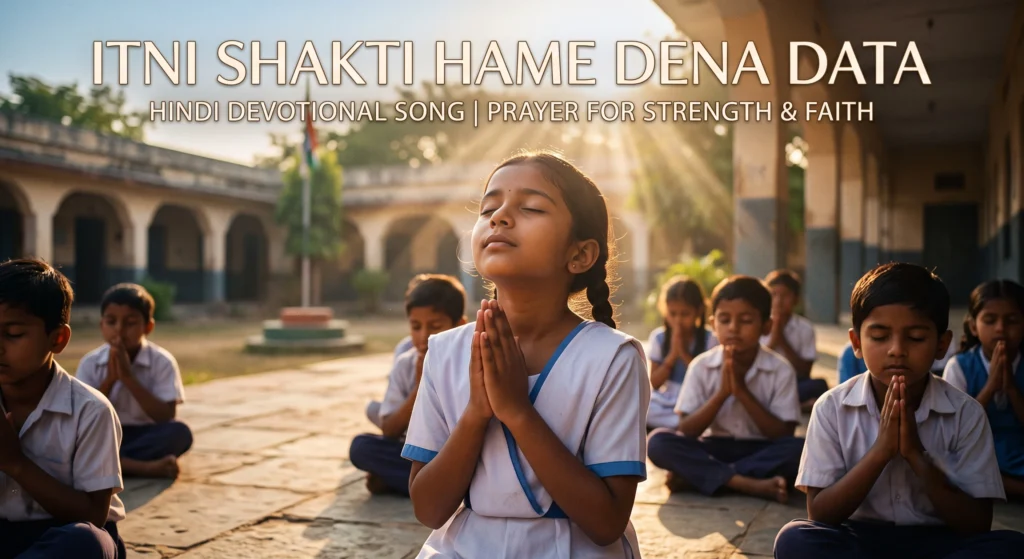
Very few songs in the history of Indian cinema have transcended the boundaries of film and entertainment to become an integral part of the daily lives of millions. “Itni Shakti Hame Dena Data Lyrics” is arguably the most prominent example of such a masterpiece. Released in the 1986 film Ankush, this timeless creation has resonated across generations, embedding itself firmly into the cultural and educational fabric of India. It is not just a song; it is a universal morning prayer recited in countless schools, institutions, and homes across the nation.
The popularity of this track stems from its profound simplicity and its universal appeal. Listeners are deeply moved by its core message, which does not ask the Almighty for material wealth, success, or luxury. Instead, it asks for inner strength, unwavering faith, and the wisdom to walk on the path of righteousness. In a world fraught with challenges and moral ambiguities, this song acts as an emotional and spiritual anchor.
Musically, the composition by Kuldeep Singh is minimalistic yet incredibly powerful. It relies heavily on choral harmony, utilizing traditional Indian instruments layered with soft, rhythmic beats that mimic the steady, reassuring heartbeat of collective prayer. The lyrical genius of Abhilash shines through words that are simple enough for a young child to grasp, yet profound enough for adults to reflect upon during times of crisis. The overall emotion is one of utter surrender, hope, and an earnest desire to remain pure at heart, making “Itni Shakti Hame Dena Data” a phenomenal study in musical storytelling and moral education.
Detailed Song Meaning and Explanation
The core meaning of “Itni Shakti Hame Dena Data” revolves around an intense, heartfelt plea to the Supreme Creator (Data) for psychological and spiritual endurance. The song unfolds as a deep conversation between a fragile human mind and the Almighty. The primary request is not for an easy life devoid of hardships, but rather for the mental fortitude (Shakti) and unwavering self-belief (Vishwas) necessary to face life’s inevitable adversities without losing one’s moral compass.
The Story and Emotion: Within the context of the movie Ankush, the song is sung by a group of unemployed, disillusioned youths who are trying to reform their lives. They have lived on the edge of societal decay and are now seeking a path of redemption. The emotion is incredibly poignant—it mixes remorse for past mistakes with a desperate, hopeful clinging to a better, more virtuous future. However, outside the movie, the story becomes a universal human narrative. It represents every individual’s daily struggle to remain good in a world that often rewards negativity.
Hidden Meanings and Symbolism: The lyrics frequently employ contrasting symbolism. “Agyaan ke andhere” (darkness of ignorance) is contrasted with “Gyaan ki roshni” (light of knowledge). This indicates that true evil is not external but stems from human ignorance. The singer asks for the wisdom to see clearly. Furthermore, the lines “Ham na sochen hamen kya milaa hai, Ham ye sochen kiya kya hai arpan” carry a profound philosophical message inspired by the Bhagavad Gita—focusing on one’s duties and contributions rather than constantly calculating what one has received from the world.
Message and Life Lessons: The greatest life lesson imparted by this song is the rejection of vengeance. “Bair ho naa kisi ka kisi se, Bhavna man mein badle ki ho na” translates to a wish that no one holds enmity against another, and the desire for revenge is entirely eradicated from the human heart. It teaches altruism (“Phool khushiyon ke bante sabhi ko”)—the idea that spreading happiness to others is the most effective way to turn one’s own life into a beautiful garden (“Madhuban”). Ultimately, it is a masterclass in empathy, spiritual cleansing, and moral responsibility.
Meaning in Multiple Languages
English Meaning
This deeply spiritual song acts as a profound prayer to the Almighty. The speaker humbly requests God to grant them enough inner strength so that their self-belief and faith never waver, regardless of life’s circumstances. The prayer asks for guidance to always walk on the righteous path, ensuring that they do not commit any mistakes, even inadvertently. It pleads for the removal of the darkness of ignorance, seeking the illuminating light of wisdom instead. The song emphasizes the importance of living a life free from malice, enmity, and revenge. Rather than selfishly counting what one has gained from the world, the focus shifts to what one can offer to humanity. It is a beautiful lesson in spreading joy, asking God to wash away the impurities of the human mind with the waters of His compassion.
Hindi Meaning (हिन्दी अर्थ)
“इतनी शक्ति हमें देना दाता” केवल एक गीत नहीं, बल्कि एक अत्यंत मार्मिक और प्रभावशाली प्रार्थना है। इस प्रार्थना में ईश्वर से धन-दौलत नहीं, बल्कि आत्मिक बल और मन का अटूट विश्वास माँगा गया है। भक्त भगवान से विनती करता है कि हम हमेशा सच्चाई और नेकी के मार्ग पर चलें और हमसे भूलकर भी कोई पाप या गलती न हो। यह गीत हमें अज्ञानता के अंधेरे से निकालकर ज्ञान के प्रकाश की ओर ले जाने की याचना करता है। इसकी सबसे बड़ी सीख यह है कि हमारे मन में किसी के प्रति दुश्मनी या बदले की भावना न हो। हमें यह नहीं सोचना चाहिए कि दुनिया ने हमें क्या दिया है, बल्कि हमारा ध्यान इस बात पर होना चाहिए कि हमने समाज को क्या अर्पण किया है। यह प्रार्थना ईश्वर की करुणा से हमारे मन के हर कोने को पवित्र करने का संदेश देती है।
বাংলা অর্থ (Bengali Meaning)
“এতনি শক্তি হামে দেনা দাতা” গানটি একটি অত্যন্ত গভীর এবং অনুপ্রেরণামূলক প্রার্থনা। এই গানে ঈশ্বরের কাছে কোনো বস্তুগত সম্পদ চাওয়া হয়নি, বরং চাওয়া হয়েছে মানসিক শক্তি এবং আত্মবিশ্বাস। প্রার্থনাকারী ঈশ্বরের কাছে প্রার্থনা করেন যেন তাদের মন কখনও দুর্বল না হয় এবং তারা যেন সর্বদা সত্য ও ন্যায়ের পথে চলতে পারে। ভুল করেও যেন তাদের দ্বারা কোনো অন্যায় না হয়। গানটিতে অজ্ঞতার অন্ধকার দূর করে জ্ঞানের আলো প্রজ্জ্বলিত করার অনুরোধ করা হয়েছে। এর একটি বড় শিক্ষণীয় দিক হলো, কারও প্রতি যেন আমাদের মনে শত্রুতা বা প্রতিশোধের আকাঙ্ক্ষা না থাকে। আমরা পৃথিবী থেকে কী পেয়েছি তার চেয়ে আমরা কী দিতে পেরেছি, সেটাই বড় কথা। ঈশ্বরের করুণার জলে আমাদের মনের সমস্ত মলিনতা ধুয়ে পবিত্র করার এক সুন্দর আকুতি এই গানে ফুটে উঠেছে।
தமிழ் பொருள் (Tamil Meaning)
“இத்னி ஷக்தி ஹமே தேனா தாத்தா” என்பது ஒரு மிகவும் ஆழமான மற்றும் உத்வேகம் தரும் பிரார்த்தனை பாடலாகும். இந்தப் பாடலில், இறைவனிடம் பொருட்செல்வத்தை கேட்காமல், மன உறுதியையும், தளராத நம்பிக்கையையும் வழங்குமாறு வேண்டப்படுகிறது. எப்போதும் நேர்மையான பாதையில் நடக்கவும், அறியாமலேயே கூட எந்தவொரு தவறும் செய்துவிடக் கூடாது என்றும் இறைவனிடம் பிரார்த்திக்கப்படுகிறது. அறியாமை என்ற இருளை அகற்றி, ஞானம் என்ற ஒளியை வழங்குமாறு பாடல் கோருகிறது. யார் மீதும் பகைமை உணர்வோ, பழிவாங்கும் எண்ணமோ மனதில் இருக்கக் கூடாது என்பது இதன் முக்கிய கருத்தாகும். உலகம் நமக்கு என்ன கொடுத்தது என்று நினைப்பதை விட, நாம் சமூகத்திற்கு என்ன செய்தோம் என்பதில் கவனம் செலுத்த வேண்டும். இறைவனின் கருணையால் நமது மனதின் ஒவ்வொரு மூலையும் தூய்மை அடைய வேண்டும் என்ற அழகான செய்தி இதில் கூறப்பட்டுள்ளது.
Line-by-Line Lyrics Meaning
Educational Vocabulary
Theme Analysis
- Hope and Belief: The central pillar of the song. It teaches that faith in oneself and the higher power is the strongest armor against life’s tribulations.
- Morality and Ethics: Through lines like “Ham chalen nek raste pe,” the lyrics strongly emphasize the importance of making ethical choices, especially when doing the wrong thing is easier.
- Selfless Service: The song challenges the materialistic human nature by asking individuals to focus on what they can give to the world rather than what they can take from it.
- Eradication of Ego: It asks for a mindset completely devoid of vengeance and enmity, which is the ultimate dissolution of human ego and pride.
- Spiritual Cleansing: The closing verses invoke the imagery of water washing away impurities, symbolizing psychological healing and inner peace.
Musical Analysis
- Melody: The melody is incredibly soothing, based on traditional Indian ragas that invoke the feeling of early morning serenity and divine devotion.
- Vocals: Utilizing a choir-like structure rather than a single dominating voice gives the song a collective identity. It sounds like the voice of humanity rather than one person.
- Instrumentation: The music composer, Kuldeep Singh, kept the arrangement minimal. Subtle use of the harmonium, acoustic guitar, and soft percussions ensures the lyrical message is never overshadowed by loud music.
- Audience Appeal: The tempo is deliberate and steady, perfectly designed for congregational singing. This is precisely why it was so easily adopted as a school prayer across the subcontinent.
Singer & Creator Profile
Singers – Pushpa Pagdhare & Sushma Shrestha (Poornima):
The song brings together the experienced tonal quality of Pushpa Pagdhare and the youthful vibrance of Sushma Shrestha (who later became famously known as Poornima). Their voices blend seamlessly, reflecting a universal plea that crosses the barriers of age. While Pushpa Pagdhare provided the gravitas, Sushma brought an innocent, child-like purity to the track, which is exactly why it appeals so much to children and adults alike.
Lyricist – Abhilash:
Born as Om Prakash, Abhilash is the literary mastermind behind these immortal words. His writing is celebrated for its spiritual depth wrapped in accessible language. “Itni Shakti Hame Dena Data” became the defining work of his career, earning him widespread respect, awards, and establishing his legacy as a writer who could touch the very soul of the common man.
Music Director – Kuldeep Singh:
A composer known for his meaningful and melody-driven cinema music (such as in the movie Saath Saath), Kuldeep Singh understood the requirement of the film Ankush perfectly. He composed a tune that was melancholic yet hopeful, creating an atmosphere of deep introspection.
Lyrics Section
The complete lyrics are displayed below as provided for reference and educational study.
इतनी शक्ति हमें देना दाता (Hindi Lyrics)
इतनी शक्ति हमें देना दाता
मन का विश्वास कमजोर हो ना
हम चलें नेक रस्ते पे
हमसे भूलकर भी कोइ भूल हो ना
इतनी शक्ति हमें देना दाता
मन का विश्वास कमजोर हो ना
हम चलें नेक रस्ते पे,
इतनी शक्ति हमें देना दाता
दूर अज्ञान के हो अंधेरे
तू हमें ज्ञान की रोशनीं दे
हर बुराई से बचते रहें हम
जितनी भी दे, भली जिन्दगी दे
बैर हो ना किसि का किसी से
भावना मन में बदले कि हो ना
हम चलें नेक रस्ते पे,
हमसे भूलकर भी कोइ भूल हो ना
इतनी शक्ति हमें देना दाता
मन का विश्वास कमजोर हो ना
हम ना सोचें हमें क्या मिला है
हम ये सोचें किया क्या है अर्पण
फूल खुशियों के बाटें सभी को
सबका जीवन ही बन जाये मधुबन
अपनी करुणा का जल तू बहाके
कर दे पावन हर एक मन का कोना
हम चलें नेक रस्ते पे
हमसे भूलकर भी कोइ भूल हो ना
इतनी शक्ति हमें देना दाता
मन का विश्वास कमजोर हो ना
Itni Shakti Hame Dena Data (English Transliteration)
Itni Shakti Hame Dena Data
Man ka vishvas kamjor ho na
Ham chalen nek raste pe
Hamse Bhoolkar bhi koi bhool ho na
Itni Shakti Hame Dena Data
Man ka vishvas kamjor ho na
Ham chalen nek raste pe
Itni Shakti Hame Dena Data
Door agyaan ke ho andhere
Tu hamen gyaan ki roshni de
Har burai se bachte rahen ham
Jitni bhi de, bhali jindgi de
Bair ho naa kisi ka kisi se
Bhavna man mein badle ki ho na
Ham chalen nek raste pe
Hamse Bhoolkar bhi koi bhool ho na
Itni Shakti Hame Dena Data
Man ka vishvas kamjor ho na
Ham na sochen hamen kya milaa hai
Ham ye sochen kiya kyaa hai arpan
Phool khushiyon ke bante sabhi ko
Sabka Jivan hi ban jaye madhuban
Apni karuna ka jal tu bahake
Kar de pavan har ek man ka kona
Ham chalen nek raste pe
Hamse Bhoolkar bhi koi bhool ho na
Itni Shakti Hame Dena Data
Man ka vishvas kamjor ho na
Interesting Facts
- 1.
National Phenomenon: Despite being a film song, it is officially used as the morning prayer in thousands of schools across India. - 2.
Translation and Reach: This song has been translated into over eight different regional Indian languages for educational purposes. - 3.
Prison Reform: Several Indian correctional facilities and jails play this song in the morning to encourage spiritual reform among inmates. - 4.
Lyricist’s Struggle: Lyricist Abhilash struggled for many years in the industry before this single song cemented his name in history permanently. - 5.
Low Budget Movie: The movie Ankush was made on a very tight budget and featured newcomers, yet its music broke records. - 6.
Timeless Appeal: Even more than 35 years after its release, it remains one of the most searched prayer songs on YouTube India. - 7.
Choral Setup: The song was recorded with a large physical choir in the studio to give it an authentic, echoing, prayer-hall feeling. - 8.
Secular Nature: The song does not use names of any specific deities (like Ram, Allah, or Jesus), making it entirely secular and universally acceptable. - 9.
Psychological Healing: Many psychologists in India recommend listening to this track for patients dealing with anxiety, due to its grounding lyrics. - 10.
N. Chandra’s Direction: The context of the movie, directed by N. Chandra, revolves around angry, unemployed youth finding direction, making the lyrics perfectly situational. - 11.
Child Singer’s Career: Sushma Shrestha, who sang the high notes, had a very successful career as a child artist before transitioning to mainstream playback singing. - 12.
Presidential Recognition: The song’s profound impact on Indian society has been acknowledged by several prominent leaders and educationists over the decades.
Frequently Asked Questions (FAQs)
1. What is the meaning of “Itni Shakti Hame Dena Data”?
The phrase translates to “O Almighty, give us so much strength.” It is a prayer asking God for mental and spiritual strength so that our self-belief never weakens.
2. Which movie is this song from?
The song is from the critically acclaimed 1986 Hindi movie named Ankush, directed by N. Chandra.
3. Who wrote the lyrics of this song?
The inspiring lyrics were penned by the veteran lyricist Abhilash (born Om Prakash).
4. Who sang “Itni Shakti Hame Dena Data”?
The song was sung by playback singers Pushpa Pagdhare and Sushma Shrestha (who is also known as Poornima).
5. Who composed the music?
The beautiful, soothing musical composition was created by music director Kuldeep Singh.
6. Why is this song so popular in India?
It is popular because of its completely secular and deeply moral message. It became the standard morning prayer in Indian schools, embedding itself in the memories of millions of students.
7. What does “Nek raste pe chalna” mean?
It translates to “walking on the righteous path.” The song prays that individuals always choose honesty and morality over shortcuts and bad deeds.
8. Is this song considered a religious bhajan?
While it acts as a prayer, it is generally considered a secular, spiritual, and motivational song rather than a strict religious bhajan, as it mentions “Data” (Provider) universally without naming specific deities.
9. What is the central message of the song?
The central message is to maintain unshakeable self-belief, avoid malice and vengeance, give selflessly to society, and seek knowledge over ignorance.
10. What language is the song written in?
The original song is written in pure Hindi, though it has since been translated into many other regional Indian languages.
11. What does the word ‘Madhuban’ signify in the lyrics?
‘Madhuban’ literally means a garden of honey. In the song, it is used metaphorically to represent a beautiful, prosperous, and joyous life for everyone.
12. When was the song released?
The song was released in the year 1986 along with the release of the movie Ankush.
Conclusion
“Itni Shakti Hame Dena Data” is much more than a cinematic creation; it is a profound philosophical guide wrapped in the gentle embrace of music. Through our comprehensive Song Explanation, we observe how a simple prayer can touch upon complex human emotions—fear, doubt, hope, and the innate desire for goodness. The English Meaning, Hindi Meaning, বাংলা অর্থ, and தமிழ் பொருள் all point towards a singular, unifying truth: human strength lies not in physical dominance, but in mental resilience and a pure heart.
In today’s fast-paced, highly competitive, and often stressful world, the teachings of this song are more relevant than ever. It encourages listeners to step away from the shadows of ignorance and revenge, urging them to cultivate a mindset of compassion and selfless service. We highly encourage readers to not simply memorize these lyrics mechanically, but to deeply absorb the moral lessons they offer.
By reflecting on the Lyrics Meaning and integrating its message into our daily routines, we can genuinely strive to walk the “Nek Rasta” (righteous path). May this timeless anthem continue to inspire generations, reminding us all that true victory is found in a heart that harbors no ill-will and a mind fortified by unwavering faith.
About This Article
| Reviewed By | Music Research Team |
|---|---|
| Content Type | Song Meaning, Translation, Background & Educational Analysis |
| Published | July 6, 2026 |
| Last Updated | August 9, 2026 |
| Reading Time | 12 min read |
| Article Purpose | Provide educational analysis, song meaning, translation, artist information, and verified music facts. |
Sources
This article has been prepared using publicly available music information and reliable editorial references. Song details, artist information, and album metadata have been verified using the following official and trusted sources whenever available.
- Official Artist Website
- Official Record Label
- Spotify
- Apple Music
- YouTube Music
- MusicBrainz
- Discogs
- AllMusic
- IMDb (where applicable)
Copyright Notice
Copyright Disclaimer & DMCA Notice:
Song lyrics are protected by copyright law and are the exclusive property of their respective owners. The lyrics and translations provided on this website are published for educational, commentary, research, and informational purposes only.
Notice to Copyright Holders:If you are a copyright owner or an authorized agent and believe that any content on this website infringes upon your copyrights, please contact us at info@songsubtext.com.
We respect intellectual property rights and will promptly remove any infringing material upon valid request.
Editorial Policy
Our editorial team researches every article using reliable music databases, official artist information, album credits, and trusted industry resources. Every page is reviewed for originality, accuracy, and compliance with copyright regulations.